
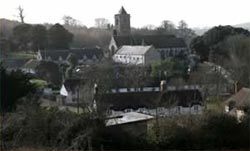
Set in the lower Otter Valley between Budleigh Salterton and Sidmouth, Otterton is widely regarded as one of East Devon’s most picturesque villages. Known for its thatched cottages, village green, ancient watermill and strong community spirit, it combines rural charm with a surprisingly good range of amenities for a village of its size. [Otterton V...ge Website],[en.wikipedia.org]
Today, the village has a population of around 750 residents, making it one of the larger villages in the lower Otter Valley while still retaining the feel of a close-knit rural community.
Village Facilities
Otterton offers a range of services and amenities that help make it a vibrant and self-sustaining community:
- The King's Arms, a traditional village pub, restaurant and hotel, sits at the heart of the village and serves as an important social hub for residents and visitors alike.
- Otterton Mill, one of the village's best-known attractions, combines a working watermill with a café, artisan workshops, gallery and shop. It attracts visitors from across Devon and beyond.
- A village shop provides everyday essentials and helps support local life.
- Otterton Church of England Primary School serves local families and is highly regarded within the community.
- The village has an active village hall, youth activities, sports clubs, gardening groups and numerous community events throughout the year.
- Nearby footpaths provide easy access to the South West Coast Path, Ladram Bay and the Otter Estuary Nature Reserve, making the village particularly attractive to walkers and nature enthusiasts.
 |
|  |
The Lower Otter Riverside Walk leaflet describes the riverside walk from Budleigh Salterton to Newton Poppleford.
Transport and Accessibility
Despite its peaceful rural setting, Otterton is well connected to the surrounding towns of East Devon.
The village lies close to the B3178, providing convenient road access to Budleigh Salterton, Sidmouth, Ottery St Mary and Exmouth. Exeter city centre and the M5 motorway can generally be reached within around 30 to 40 minutes by car, making the village attractive to commuters seeking a countryside lifestyle. [en.wikipedia.org], [postcodesuk.com]
While Otterton no longer has its own railway station, residents are within easy reach of rail services at Exmouth, Honiton and Feniton, offering connections to Exeter, London and the wider national rail network. [en.wikipedia.org]
Bus services link the village with nearby towns, although most residents rely on private transport for day-to-day travel. [postcodesuk.com]
Nearby Services
One of Otterton’s strengths is that it combines village living with easy access to a wide range of services nearby.
Just two miles away, Budleigh Salterton offers supermarkets, independent shops, cafés, restaurants, pharmacies, a library, medical services and a variety of professional businesses. [postcodesuk.com], [en.wikipedia.org]
A little further east, Sidmouth provides a broader range of retail outlets, leisure facilities, healthcare services, secondary schools and cultural attractions. [en.wikipedia.org]
For larger shopping trips, higher education, major employers and hospital services, residents have easy access to both Exmouth and Exeter. Healthcare needs are supported locally through GP services in Budleigh Salterton, with specialist and acute healthcare available in Exeter. [postcodesuk.com]
What Is It Like to Live in Otterton?
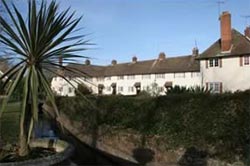
Otterton is often described as the quintessential Devon village. Rows of thatched cottages, old farmhouses, mature trees and open green spaces create a characterful and attractive environment that has changed little in appearance over generations. [otterton.info], [en.wikipedia.org]
The village enjoys a particularly strong sense of community. Annual events, village celebrations, sporting activities and local clubs help bring residents together, while the surrounding countryside, river valley and nearby coastline provide an exceptional quality of life for those who enjoy the outdoors. [Otterton V...ge Website], [otterton.info]
Unlike some rural villages that function primarily as dormitory settlements, Otterton retains a genuine community identity, supported by its school, pub, village organisations and local businesses. [otterton.info], [Otterton V...ge Website]
In Summary
Today, Otterton is a thriving village of around 750 people, offering a village pub, shop, primary school, village hall, active community groups and the much-loved Otterton Mill. Residents enjoy a peaceful rural setting while remaining within easy reach of the services, shopping, healthcare and employment opportunities provided by Budleigh Salterton, Sidmouth, Exmouth and Exeter. Surrounded by some of East Devon’s finest countryside and close to the Jurassic Coast, it remains one of the most attractive and desirable villages in the lower Otter Valley. [Otterton V...ge Website], [citypopulation.de], [en.wikipedia.org]
A Brief History of Otterton
The ancient village at the heart of the Lower Otter Valley
Nestled beside the winding River Otter, the village of Otterton is one of East Devon's oldest and most characterful settlements. With roots stretching back well over a thousand years, its history reflects many of the themes that have shaped the Lower Otter Valley: farming, industry, trade, religion and the changing relationship between people and the landscape. The OVApedia archive reveals a village whose story is far richer and more significant than its modest size might suggest. [ova.org.uk], [ova.org.uk]
Early Bronze Age Otterton
Long before the Saxons, Normans or medieval priors arrived, people were living and farming in the Otter Valley during prehistoric times. Archaeological evidence from the nearby East Devon Pebblebed Heaths, Bicton Common and the high ground overlooking the River Otter shows that the area was occupied during the Early Bronze Age, roughly between 2500 and 1500 BC. Burial mounds (barrows), prehistoric field systems and artefacts found across the heathland indicate that communities were already exploiting the valley's resources thousands of years before written history began. [ova.org.uk], [ova.org.uk]
The elevated ridges above Otterton would have offered excellent views over the estuary and surrounding countryside, while the fertile floodplain along the River Otter provided water, grazing and agricultural opportunities. Many of the Bronze Age burial mounds that survive today on the Pebblebed Heaths served both as ceremonial monuments and territorial markers, demonstrating that this landscape held spiritual as well as practical importance. [ova.org.uk], [ova.org.uk]
Although modern Otterton did not yet exist, the valley was already an established human landscape. The continuity of settlement from prehistoric farming communities, through the Iron Age and Romano-British periods, helps explain why the lower Otter Valley later became such an attractive location for Saxon settlement. [ova.org.uk], [ova.org.uk]
Origins in the Saxon Age
The origins of Otterton can be traced back to at least the Saxon period. Its location beside a reliable river crossing and close to fertile farmland made it an attractive place for early settlement. By the time of the Domesday Survey in 1086, the lower Otter Valley was already an established and productive agricultural area. [ova.org.uk], [ova.org.uk], [ova.org.uk]
The village takes its name from the river itself, which was historically one of East Devon's most important natural features, providing water, fish, transport links and fertile floodplain soils. [ova.org.uk], [ova.org.uk]
Medieval Otterton: Priors, Harbours and Trade
Otterton's origins as a significant settlement can be traced back to the Saxon period, when communities developed around the wide and navigable waters of the lower River Otter. By the time of the Norman Conquest, Otterton had become one of the most important manors in East Devon, with access to a sheltered harbour linked directly to the Otter Estuary. The 1086 Domesday Survey records a substantial settlement, including mills, agricultural land and a notable salt-producing industry, reflecting the prosperity that the estuary brought to the village. [ova.org.uk], [otterton.info]
After 1066, William the Conqueror granted the Manor of Otterton to the Abbey of Mont-Saint-Michel in Normandy, rewarding the abbey for its support during the Norman invasion. This began more than three centuries of ecclesiastical ownership of the manor. In the twelfth century, Otterton Priory was established as a daughter house of the Norman abbey, becoming an important administrative and agricultural centre for the lower Otter Valley. [otterton.info], [ova.org.uk]
The priory's monks managed farms, fisheries and harbour facilities, while Otterton prospered from maritime trade. Medieval records show fish being landed and sold in Otterton's market, while the estuary connected local merchants with ports across southern England and northern France. Trade in wine, cloth, agricultural produce and fish contributed to the village's growing wealth. [ova.org.uk], [ova.org.uk]
The strategic importance of the estuary also brought danger. During the Hundred Years' War with France, vessels from Ottermouth and the lower Otter Valley were requisitioned for royal service, while local shipping suffered from piracy and French raids. Despite these challenges, the fifteenth century marked the height of Otterton's maritime prosperity. [ova.org.uk], [ova.org.uk]
A Manor Village
For centuries, life in Otterton revolved around the manor. The village developed as a farming community whose residents worked the surrounding land, mills and estate properties. Several OVApedia articles chart the history of the influential Duke family, who owned Otterton Manor from the sixteenth century onwards and played a major role in the village's development. [ova.org.uk], [ova.org.uk]
The historic Manor House still stands as one of the village's most important buildings, alongside a remarkable collection of thatched cottages, farmhouses and traditional vernacular buildings that preserve the character of earlier centuries. [ova.org.uk]
The Arrival of the Rolle Family
The gradual silting of the estuary during the late fifteenth and sixteenth centuries reduced Otterton's importance as a harbour, leading the village to focus increasingly on farming. Following the Reformation and the dissolution of monastic estates, ownership of the manor passed through several hands before eventually becoming part of the extensive estates of the Rolle family in 1786. [otterton.info]
For more than a century, the Rolle family became the dominant landowners across much of East Devon, including Otterton, Bicton and the surrounding countryside. The family invested heavily in agriculture, estate management, housing and infrastructure. Many of the farms, estate cottages, boundary walls and village buildings that define Otterton's distinctive appearance today owe their origins, directly or indirectly, to the Rolle Estate. Their influence helped preserve the village's rural character at a time when many settlements elsewhere were undergoing rapid industrialisation. [otterton.info]
The family's principal seat at nearby Bicton House became one of Devon's grandest country estates. Through their stewardship, much of the land around Otterton remained agricultural, helping to maintain the close relationship between village, river and countryside that continues to define the parish today. [otterton.info]
In 1907, ownership of the estate passed to the Clinton family, ending more than a century of Rolle influence. Nevertheless, the physical and social legacy of the Rolle era remains visible throughout Otterton and the wider lower Otter Valley. [otterton.info]
Farming and Rural Life
Agriculture has always been at the centre of Otterton's economy and identity. The village sits within some of East Devon's most productive farmland, and generations of families earned their living from mixed farming and livestock husbandry. The surrounding landscape of fields, orchards, hedgerows and water meadows would have been familiar to villagers for hundreds of years. [ova.org.uk], [ova.org.uk]
Unlike larger Devon towns, Otterton remained primarily rural, escaping much of the nineteenth-century urban growth that transformed other communities. This has helped preserve both its historic layout and many of its traditional buildings.[ova.org.uk]
Industry Along the River
Although principally an agricultural village, Otterton was not without industry. The OVApedia archive records the existence of an Otterton Brickyard & Tilery, which supplied materials for local building projects during the nineteenth century. Local clay deposits and easy access to transport routes made brickmaking a viable rural industry. [ova.org.uk], [ova.org.uk]
The River Otter itself also supported milling, while nearby communities benefited from trading opportunities linked to the estuary and coast. [ova.org.uk], [ova.org.uk]
Otterton and the Sea
Despite being inland, Otterton has long been connected to the sea. The lower reaches of the River Otter once supported maritime trade, and local people were involved in shipping, fishing and coastal activities. OVApedia's articles on the estuary describe a time when vessels could navigate much further inland than many people realise today. [ova.org.uk], [ova.org.uk]
The village's proximity to the coast also exposed it to the influences of smuggling, coastal trade and maritime commerce that characterised much of Devon's history. [ova.org.uk], [ova.org.uk]
Bridges, Roads and Connections
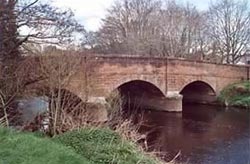
Communication routes have always been important to Otterton. Historic crossings such as Clamour Bridge connected communities across the valley and enabled movement of goods and livestock. The village's location on routes linking inland settlements with the coast helped support local trade and social connections. [ova.org.uk], [ova.org.uk]
A Village of Stories
The OVApedia archive contains many fascinating stories linked to Otterton's residents, including clergy, soldiers, sailors, entrepreneurs and ordinary villagers whose lives illuminate different periods of local history. Articles range from family histories and biographies to accounts of criminal cases, tragedies and everyday village life. [ova.org.uk], [ova.org.uk]
These stories collectively reveal a community that has been closely connected to national events while retaining a strong and distinctive local identity. [ova.org.uk], [ova.org.uk]
Sources: Primarily based on Otterton – Historical Sketch, together with related OVApedia articles including Otterton Brickyard & Tilery, Notes on Clamour (sometimes Clammer) Bridge, the A History of the Otter Estuary series, and the collection of articles relating to the Duke family of Otterton. [ova.org.uk], [ova.org.uk], [ova.org.uk], [ova.org.uk]