
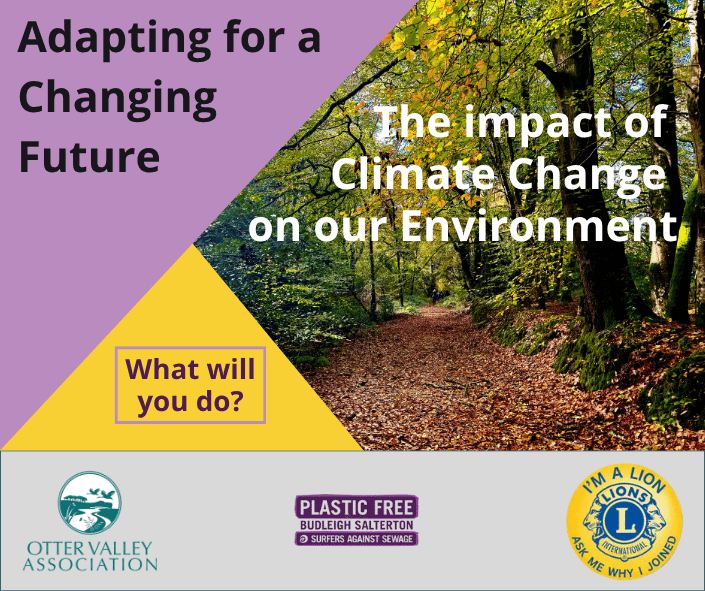
Our climate is changing. High summer temperatures are becoming more frequent and very cold winters are becoming less frequent. Rainfall patterns are changing, sea levels are rising, These changes are having effects on the distribution and density of our wildlife. Where appropriate, we will help to create flexibility and opportunities for habitats and species in the face of climate change.
The Otter valley Association is extremely concerned about the impact climate change will have on our local environment and our community. It is fair to say that everyone has heard of the phrase “Climate Change” with different people at different stages of belief.
The OVA hosted a film called the "People's Emergency Briefing" in Budleigh Salterton and East Budleigh. Additional viewings are still ongoing in towns and villages across the South West - you can find the latest on their website here: https://www.nebriefing.org. Over 3,800 screenings have already taken places across the UK, with an additional 1,500 still planned to be held.
The OVA believes that the impact from climate change will be significant and we believe that it is important to educate the community, consider what steps can be made to mitigate changes and campaign through local councils and MP’s for country-wide changes.
What the Science Says About Climate, Nature & Our Future
Across every area of research, the message from leading scientists is the same: the UK is already being affected by climate change and nature loss — but we still have powerful solutions that protect people, homes and the economy.
We are interested in working with local groups, as such the Lions, Plastic Free Budleigh, the Tree Musketeers, Budleigh-in-bloom, local town councils, East Devon District Council, Devon County Council and local MP's to look at ways in which we can all make small changes and campaign for larger country-wide changes that will help our environment and communities.
As a community we should:
- Back genuinely affordable housing rather than development driven mainly by volume.
- Support brownfield redevelopment to reduce the loss of farmland and natural habitats.
- Advocate smaller, well-integrated developments that respect local landscapes and community character.
- Call for infrastructure improvements before construction, including sewage treatment, drainage, roads, schools, health services and water supplies.
- Protect green spaces, hedgerows, wildlife corridors and productive agricultural land.
- Participate in Local Plan consultations and raising evidence-based concerns with councillors and planners.
- Hold developers and infrastructure providers accountable for environmental impacts.
- Support water conservation, habitat restoration and flood-reduction initiatives.
- Encourage planning decisions that consider climate change and long-term environmental limits, not housing targets alone.
Below is a simple summary of the most important insights coming from the National Emergency Briefing team:
Nature: Our Life‑Support System
- The UK is now one of the most nature‑depleted countries on Earth, with only half of our biodiversity left.
- Losing nature increases flooding, heat deaths, food insecurity and economic instability.
- Restoring nature — wetlands, hedgerows, peatlands, trees — is one of the highest‑value investments we can make, saving money and protecting communities.
Climate: The World Is Heating Faster Than Expected
- We are heading for dangerous levels of warming, with 2°C likely by 2050 and the possibility of 4°C later this century.
- This level of heating threatens food systems, economies and global stability.
- The good news: we already have the solutions — renewables, insulation, electrification and public transport — and they work now.
Weather Extremes: The UK Is Already Feeling It
- The UK is getting wetter winters, hotter summers and more extreme storms.
- By 2050, one in four homes could be at risk of flooding.
- Heatwaves like 2022’s 40°C event are becoming more frequent and deadly.
- Preparing now — greener cities, better drainage, cooler homes — protects lives and saves money.
Food Security: A Growing National Risk
- Climate extremes are disrupting global harvests, making food shocks more common.
- The UK imports 40–50% of its food, much from climate‑stressed regions.
- Shifting to plant‑rich diets, cutting waste and supporting resilient farming strengthens food security and reduces costs.
Health: Climate Change Is a Health Emergency
- Heat, floods, fires and pollution are already harming people’s health in the UK.
- Climate impacts also threaten the economy that funds the NHS.
- Clean air, warm homes, active travel and healthier diets improve wellbeing and cut disease.
Tipping Points: Irreversible Changes Are a Real Risk
- Some global systems — like coral reefs — have already passed critical thresholds.
- The UK faces a major risk if the Atlantic Ocean circulation (AMOC) collapses, which could bring extreme cold, water shortages and major agricultural disruption.
- Rapid emissions cuts reduce these risks and help trigger positive tipping points in clean technology.
National Security: Climate Change Is a Security Threat
- Defence experts warn that climate change is now a core national security issue.
- Food shocks, floods, fires and supply chain failures can destabilise societies.
- Clean energy and resilient infrastructure make the UK safer and more secure.
Economics: Action Costs Less Than Inaction
- Climate change is already making households poorer through higher energy and food prices.
- A fast transition to clean energy is cheaper, creates jobs and reduces inflation.
- Fixing market rules so they reward clean, resilient solutions benefits businesses and families.
Energy Transition: A Fairer, Cheaper, More Secure Future
- Fossil fuels cause energy price spikes and economic shocks.
- Renewables are now the cheapest form of power, and their fuel — sun and wind — is free forever.
- Insulation and electrification cut bills, reduce emissions and create skilled jobs across the UK.
The Big Picture
The science is clear:
- Climate change and nature loss are already affecting the UK.
- We have the solutions.
- Acting now protects people, strengthens the economy and builds a safer future.